
the latest in a large selection of both liquid-phase and gas-phase systems
Oxytherm+ measurement systems for respiration and photosynthesis —
Oxygen Measurement
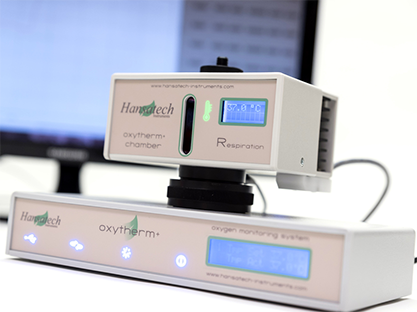

Oxygen Measurement Overview
Hansatech Instruments Ltd Oxygen Electrode Measurement Systems are based around the S1 Clark type oxygen electrode disc. The oxygen electrode systems featured on this website are configured to allow studies within a wide range of applications in cellular respiration and photosynthesis research. The systems are divided into 2 categories.
- Liquid-phase
Oxygen electrode systems are available for the measurement of oxygen evolution or uptake from chloroplasts and other suspended plant photosynthetic materials (micro-algae etc.) and oxygen consumption by various components including plant roots or various plant or animal cell suspensions including mitochondria respiration studies. These may be effectively monitored using different combinations of modular items that together form compact, user-friendly systems for research applications or teaching.
- Gas-phase
Gas-phase oxygen electrode systems allow the measurement of oxygen evolution or uptake within a sealed sample chamber. The sample chamber is designed to accommodate 10cm2 leaf discs which are cut using a special leaf disc cutter. However, any sample type such as root sections, lichens, mosses, conifer needles or small seeds may be used.
Liquid-Phase
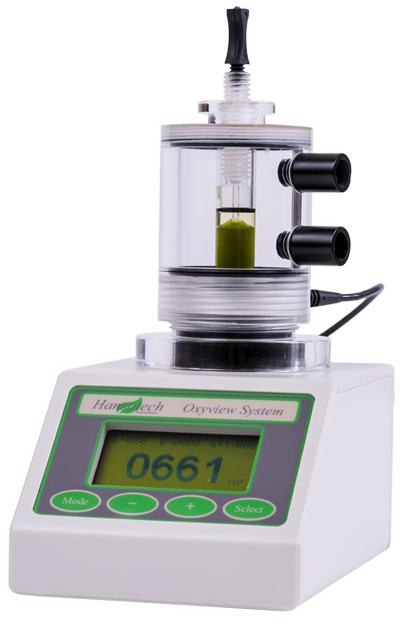
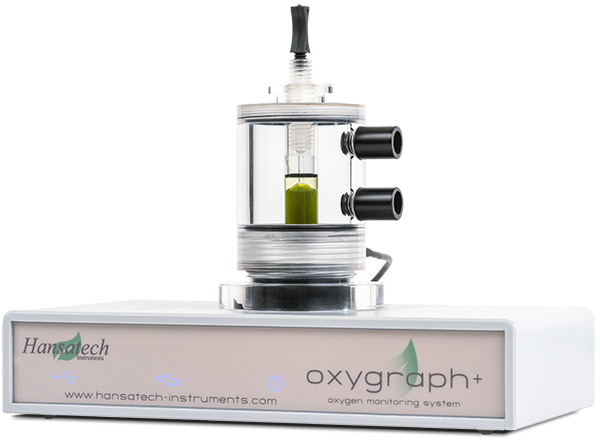
Oxytherm+
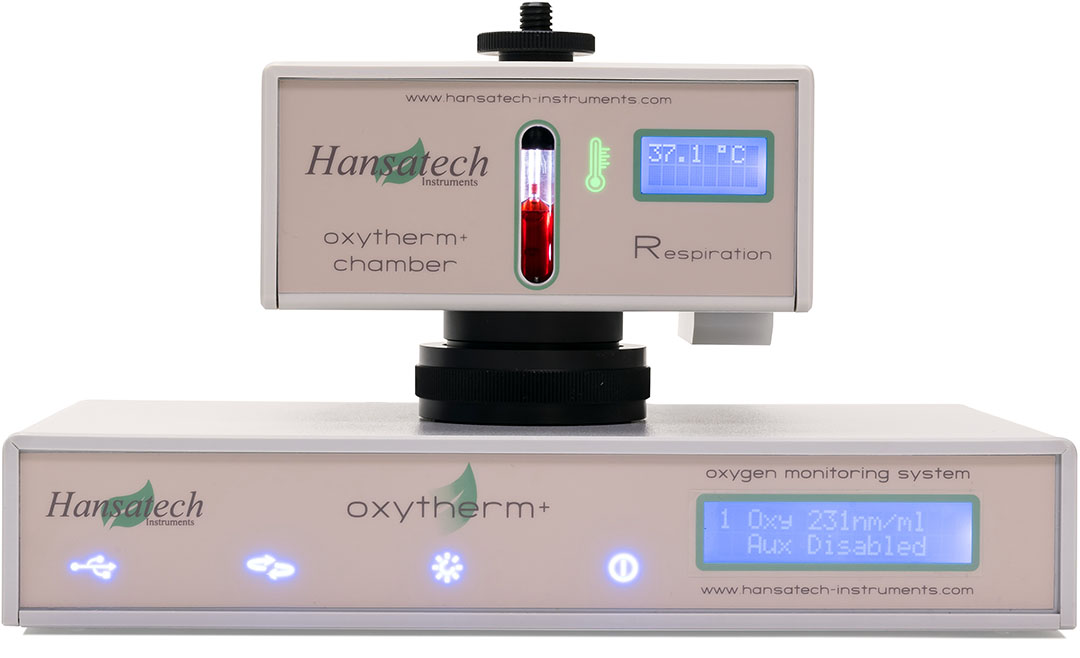
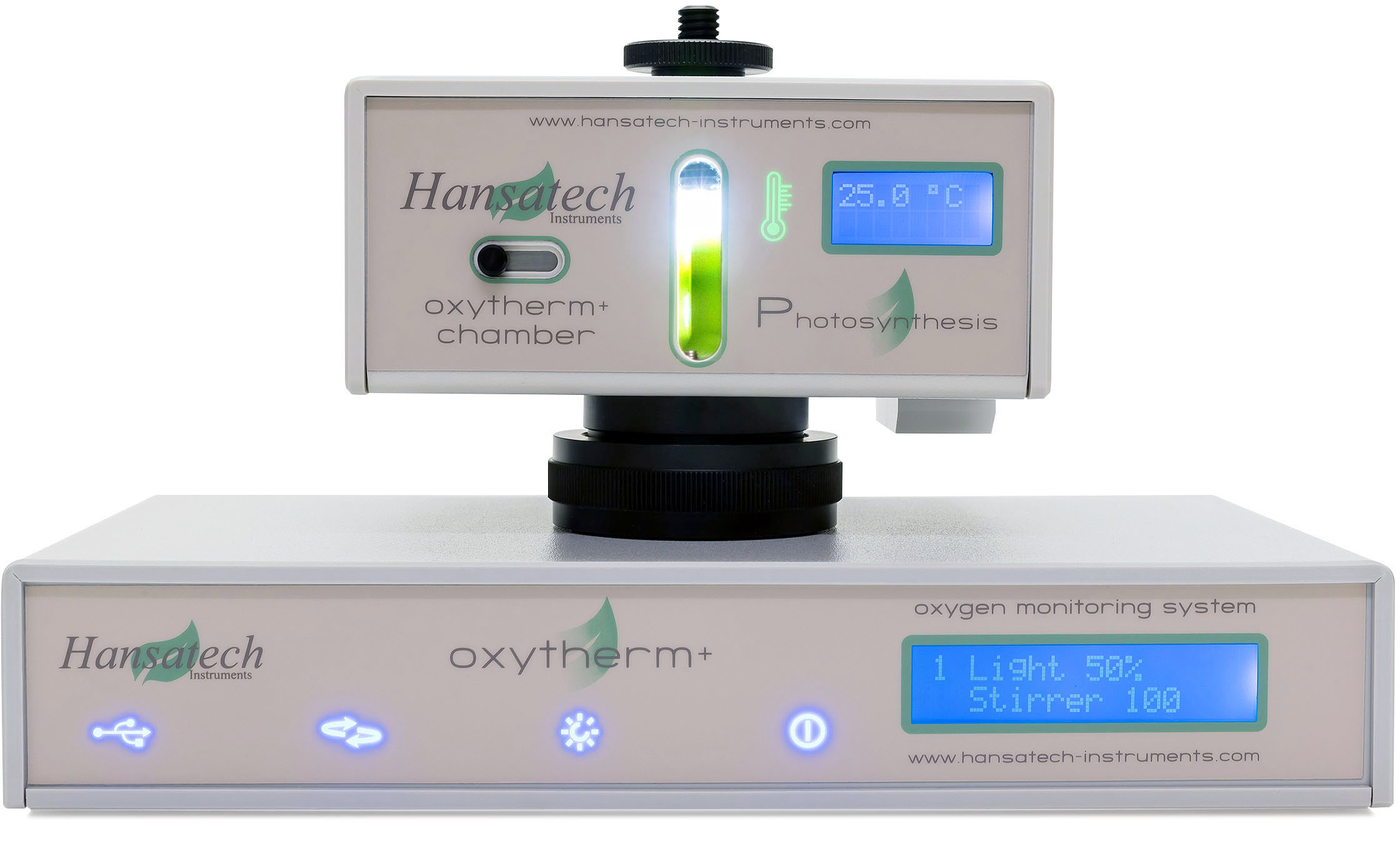
Oxytherm+ is supplied in 2 versions; Oxytherm+R (Respiration) and Oxytherm+P (Photosynthesis). Each version is fitted with an advanced electronic oxygen electrode chamber with a specific feature set to suit the intended purpose.
Both versions offer precision sample and sensor temperature control between 3 – 40°C via an integral Peltier element. Chamber temperature is configured from within the OxyTrace+ Windows software with actual chamber temperature indicated on an LCD display mounted on the front panel of the Oxytherm+ electrode chamber. A tricolour LED indicates if the chamber is cooling (blue), heating (red) or at set temperature (green).
Liquid-Phase Photosynthesis Systems
Oxytherm+P
The Oxytherm+P has additional functionality to provide optimum suitability for photosynthesis studies. 2 high-intensity white LED light sources are mounted against the outer wall of the reaction vessel. This provides uniform illumination of samples between 1 and 2ml in volume up to 4,000μmols m-2 s-1. (blue), heating (red) or at set temperature (green).
Chlorolab 2+
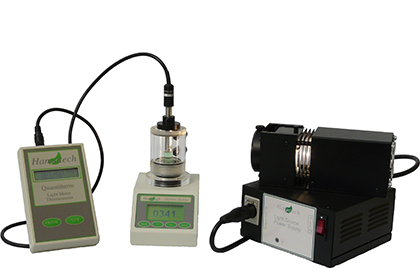
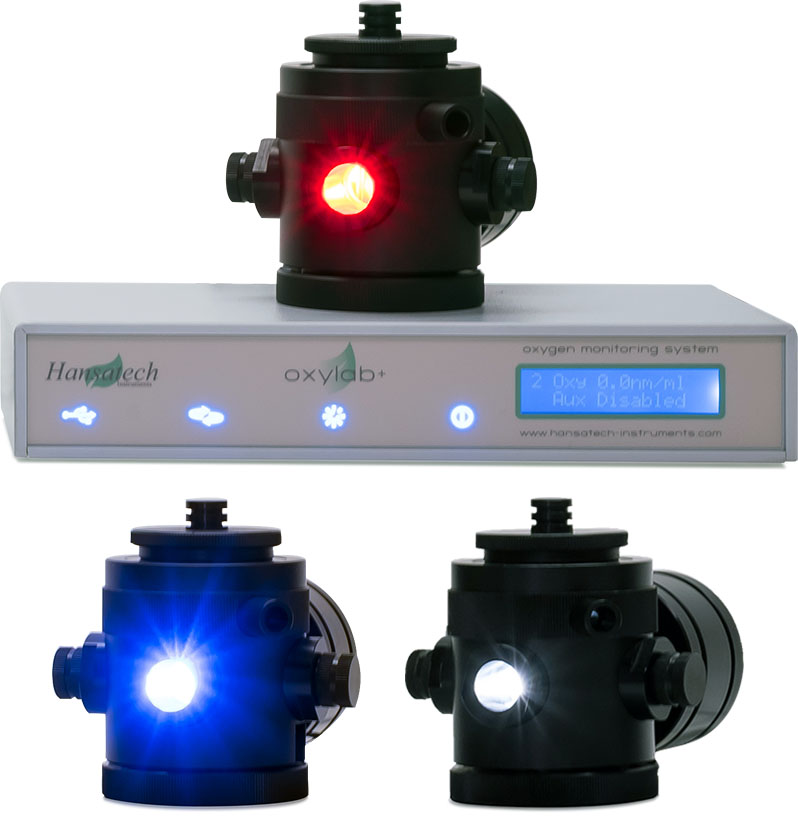
Chlorolab 2+ provides a sophisticated system for the advanced study of respiration and photosynthesis from liquid samples under automated illumination from a choice of red (LED1/R), blue (LED1/B), or white (LED1/W) high intensity LED light sources. OxyTrace+ Windows® software provides the system the ability to automate the acquisition of oxygen evolution/uptake rate over a user-defined light intensity rate and to determine the apparent quantum yield.
Chlorolab 3+
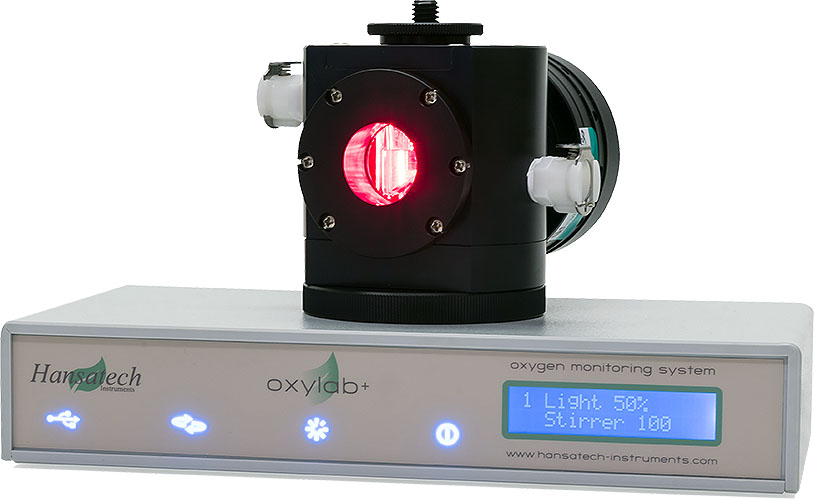
Chlorolab 3+ provides a sophisticated system for the advanced study of respiration and photosynthesis from larger volume liquid samples (to 20ml) under automated illumination from red (660nm) LED light. Utilizing OxyTrace+ Windows® software, the system provides the ability to automate the acquisition of oxygen evolution/uptake rate over a user-defined light intensity rate and to determine the apparent quantum yield. Chlorolab 3+ is particularly suitable for macroalgal studies in sea water including P/I curves by automated determination of oxygen evolution and uptake rates at a range of user-defined light intensities to determine apparent quantum yield.
Gas-Phase Photosynthesis
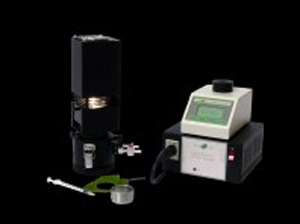
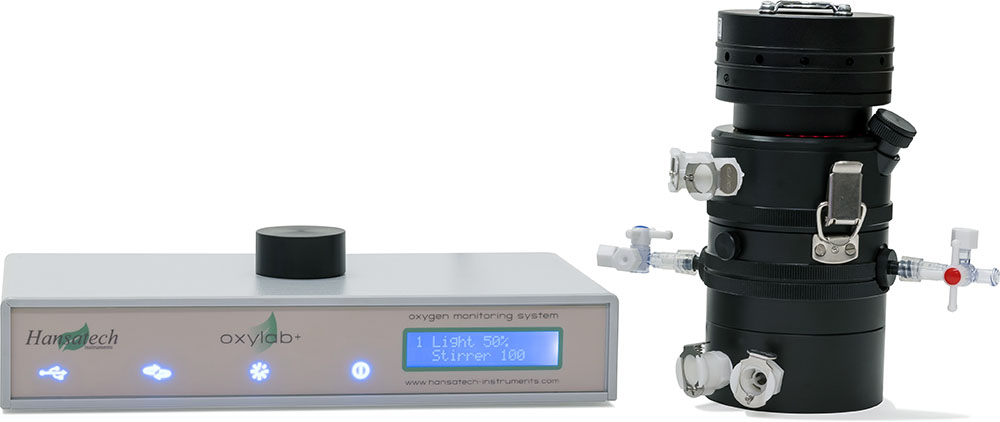
NEW Leaflab 2+
Leaflab 2+ offers the capability for advanced studies of photosynthesis and respiration from leaf-discs. The system provides computerized control of the oxygen signal with automated control of a red (660nm) LED light source array. OxyTrace+ Windows® software functions provide automated measurement of the rate of oxygen evolution/uptake at a range of user-defined light intensities in order to determine apparent quantum yield.